

Modern enterprises are increasingly shaping their operational landscapes around the concept of Intelligent habitats, a term that captures the synergy between physical environments and embedded digital intelligence. In this framework, factories, warehouses, and even office spaces evolve into responsive ecosystems that sense, analyze, and adapt in real time. By embedding sensors, robotics, and AI algorithms into the very fabric of a business, companies can achieve levels of control and efficiency that were once only imagined in science fiction. The result is a dynamic system that continuously optimizes performance, reduces waste, and empowers human workers to focus on higher‑value tasks.
Defining Intelligent Habitats for Business Control
At its core, an Intelligent habitat is a networked environment where physical assets are augmented with digital intelligence. Sensors capture data about temperature, humidity, motion, and equipment status; edge devices process this information locally; cloud platforms aggregate insights; and AI models predict trends and prescribe actions. In a business setting, the habitat spans multiple floors, production lines, and even remote sites, all unified by a common control architecture. The goal is not merely automation but purposeful, context‑aware decision making that aligns with strategic objectives.
- Real‑time monitoring of equipment health
- Adaptive resource allocation based on demand forecasts
- Dynamic reconfiguration of workflows to respond to disruptions
Robotics: The Physical Arm of Intelligent Habitats
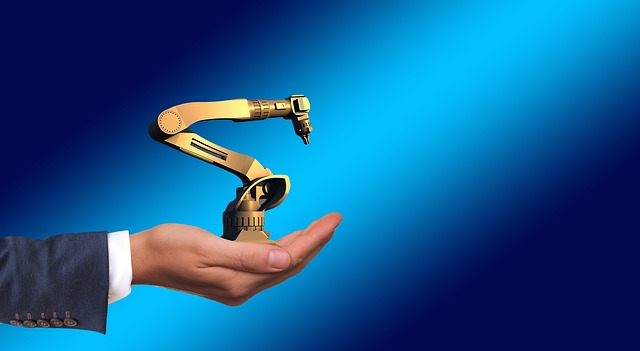
Robotics provides the tangible interface between the Intelligent habitat and the physical world. Industrial robots, autonomous guided vehicles (AGVs), and collaborative robots (cobots) perform repetitive, precise, or hazardous tasks with minimal human intervention. Their integration into the habitat is facilitated by standardized communication protocols such as OPC UA and ROS, which enable seamless data exchange between machines and control systems. Advanced robots now incorporate vision systems and force sensors, allowing them to navigate complex environments, manipulate delicate components, and adjust their behavior on the fly.
“The robot is no longer a tool; it is a node in a distributed intelligence network.” – Leading Robotics Engineer
Autonomous Production Lines
By leveraging AI for motion planning and predictive maintenance, robots can operate autonomously on production lines. AI models analyze sensor streams to anticipate wear, schedule downtime, and optimize conveyor speeds. The result is a production environment that self‑adjusts to maintain throughput while minimizing energy consumption. In sectors like automotive and electronics, these autonomous lines have reduced cycle times by up to 30% and lowered defect rates.
AI‑Driven Decision Making: From Data to Action
Artificial intelligence transforms raw sensor data into actionable insights. Machine learning algorithms detect patterns that humans cannot see, while reinforcement learning agents explore optimal strategies for resource allocation. In an Intelligent habitat, AI models run continuously, evaluating inputs such as inventory levels, weather forecasts, and market demand. The resulting recommendations can trigger automated adjustments—shifting production volumes, reallocating staff, or reconfiguring warehouse layouts—all while ensuring compliance with safety and regulatory standards.
- Data ingestion and preprocessing
- Model training and validation
- Real‑time inference and control output
Predictive Analytics for Supply Chain Resilience
Predictive models forecast supplier disruptions, shipping delays, and demand spikes. By integrating these forecasts into the habitat’s control loop, businesses can proactively adjust procurement, reroute logistics, and maintain optimal inventory levels. This level of foresight turns supply chain uncertainty into an opportunity for proactive management rather than reactive crisis response.
Automation Pipelines: Orchestrating the Habitat
Automation pipelines are the glue that binds robotics, AI, and human operators. They consist of workflow engines, event brokers, and state machines that enforce business rules across the habitat. When a sensor detects a temperature anomaly, an event is published to the broker, triggering a series of actions: the AI model assesses severity, the control system commands a cooling unit to activate, and a notification is sent to the operations manager. This orchestrated response exemplifies how Intelligent habitats maintain seamless control across distributed assets.
- Event‑driven architecture for low latency
- Policy‑based governance to enforce compliance
- Audit trails for traceability and accountability
Human‑AI Collaboration: Enhancing Workforce Effectiveness
Control over an Intelligent habitat does not eliminate human involvement; it refines it. Workers become supervisors, analysts, and problem solvers, leveraging AI insights to make better decisions. Augmented reality headsets display real‑time data overlays, while natural language interfaces allow operators to query the system and receive explanations for AI recommendations. This collaborative loop increases employee engagement, reduces errors, and accelerates innovation.
“When AI handles the routine, humans focus on the creative.” – Chief Operations Officer
Training and Skill Development
Implementing Intelligent habitats requires a workforce equipped with new skill sets. Continuous learning programs teach employees to interpret machine learning outputs, manage robotic systems, and contribute to data governance. Companies that invest in these programs see higher adoption rates and a more agile workforce ready to capitalize on automation opportunities.
Case Study: Manufacturing Excellence Through Intelligent Habitats
Consider a mid‑size electronics manufacturer that introduced an Intelligent habitat across its production, warehousing, and maintenance domains. By deploying sensor networks on assembly lines, integrating AI predictive maintenance, and automating material handling with AGVs, the plant achieved a 25% reduction in downtime and a 15% increase in throughput. Control dashboards provided real‑time visibility into all metrics, allowing the plant manager to intervene only when necessary. This holistic approach showcases how Intelligent habitats translate into tangible business outcomes.
Ethical and Regulatory Considerations
As businesses embed more AI into their habitats, they must navigate ethical challenges such as data privacy, algorithmic bias, and worker displacement. Regulatory frameworks like GDPR in Europe and emerging AI governance guidelines in the United States set standards for transparency, accountability, and data security. Companies adopting Intelligent habitats must implement robust governance models, conduct bias audits, and ensure that automation decisions are explainable and auditable.
- Data stewardship and consent management
- Bias detection and mitigation in AI models
- Workforce transition planning and upskilling
Future Outlook: Toward Autonomous Business Ecosystems
The trajectory of Intelligent habitats points toward increasingly autonomous, self‑healing ecosystems. Advances in federated learning will allow decentralized models to improve without compromising data sovereignty. Edge computing will reduce latency further, enabling immediate responses to critical events. Moreover, quantum computing may unlock new optimization algorithms that drive unprecedented efficiency. While challenges remain—particularly in standardization, cybersecurity, and societal acceptance—the potential benefits are profound: resilient operations, sustainable resource use, and a workforce empowered by intelligent tools.