

The Pulse of Modern Control
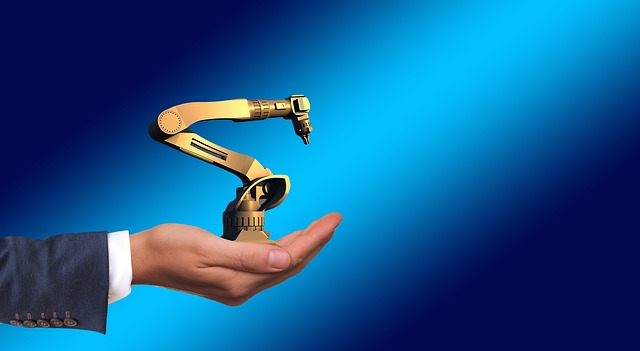
Walk into any forward-thinking factory today and you will feel an almost tangible hum of intelligence in the air. Conveyor belts glide with orchestral precision, robotic arms pirouette beside human operators, and dashboards glow with real-time data. At the heart of this choreography lies sensor processing—the silent translator that turns raw physical signals into actionable insight, allowing control systems to orchestrate robots, software agents and entire supply chains with uncanny finesse.
Why Sensors Matter More Than Ever
Sensors have been part of industrial life for decades, but the stakes have changed. In the era of pervasive connectivity and artificial intelligence, every millisecond and every byte counts. A temperature probe no longer just informs a thermostat; it becomes a data point in a predictive maintenance model. A simple camera isn’t simply providing an image; it is feeding a neural network that distinguishes a perfect weld from a microscopic defect. Without efficient sensor processing, these control loops would choke on noise, latency, and incomplete information, leaving costly blind spots in business automation.
Robotics: From Blind Motion to Perceptive Action
Consider a warehouse robot tasked with picking items from densely packed shelves. Classical motion planning works fine in a static environment, yet real life teems with unpredictability—an employee stepping into its path or a misplaced box jutting into the aisle. High-fidelity LIDAR, depth cameras and tactile sensors flood the robot’s brain with millions of data points every second. Advanced sensor processing filters that torrent, building a coherent map in real time and letting control algorithms adapt smoothly. The result? Robots that not only move, but perceive, anticipate and collaborate.
Key Techniques Elevating Robotic Control
- Sensor fusion: Blending inputs from accelerometers, gyroscopes and machine vision yields robust pose estimation even when one data source is compromised.
- Edge AI inference: Running lightweight neural models directly on robot controllers trims latency, enabling split-second collision avoidance and path re-planning.
- Adaptive feedback loops: Self-tuning controllers adjust PID gains on the fly by learning from sensor trends, ensuring stability as payloads and speeds change.
Artificial Intelligence: Deciphering Complexity at Scale
The promise of AI for business automation hinges on its appetite for data. Imagine an intelligent quality-control pipeline analyzing thousands of parts per hour. Vision systems capture high-resolution images; vibration sensors monitor press integrity; spectrometers measure surface chemistry. Raw feeds are messy, but sensor processing performs denoising, feature extraction and dimensionality reduction so machine-learning algorithms can focus on patterns, not clutter. In many cases, the preprocessing layer decides whether a model achieves 95% accuracy or languishes at 60%.
Cloud vs. Edge Considerations
AI workloads once defaulted to centralized cloud resources. Today, businesses deploy a hybrid strategy: preprocessing and time-critical inference occur at the edge, while historical data—already refined by local sensor processing—is shipped to the cloud for deeper training and analytics. This division minimizes bandwidth cost, protects sensitive information, and preserves sub-second response times crucial for tight industrial control loops.
Business Automation: Orchestrating the Entire Enterprise
Beyond the factory floor, sensor processing is creeping into boardroom decisions. Environmental sensors in office buildings feed energy management systems that automatically adjust HVAC settings, cutting operational costs. Retail analytics platforms interpret in-store camera feeds, adjusting digital signage and inventory allocation in real time. Fleet management software processes GPS, fuel and engine telemetry to reroute trucks before traffic jams steal hours of productivity. By converting sensory chaos into structured, digestible KPIs, companies shift from reactive troubleshooting to proactive optimization.
Return on Control
Every layer of refined sensory insight tightens the feedback loop between physical operations and strategic choices. Predictive maintenance slashes downtime, collaborative robots elevate human throughput, and AI-driven process tweaks shave fractions of a cent off each unit produced—fractions that stack up to millions yearly. The category of Control is no longer limited to servo motors and PLCs; it encompasses the entire value chain, united by a common nerve system built on sophisticated sensor processing.
The Human Dimension
Perhaps the most remarkable outcome is how these technologies empower people. Operators now read intuitive dashboards instead of cryptic gauges. Engineers fine-tune models via drag-and-drop interfaces rather than rewriting firmware. Executives simulate scenarios with a click, guided by live data streams distilled through layers of intelligent sensor processing. The feeling is one of newfound clarity—an elevated sense of control that invites experimentation, agility, and confidence in decision-making.
Looking Ahead
The next wave will see self-healing production lines, fully automated micro-fulfillment centers, and AI agents brokering supply contracts in milliseconds. All of it hinges on sensors that not only see, hear, and touch, but understand. The better we become at shaping raw signals into knowledge, the more fluidly businesses will operate, the more resilient they will grow, and the closer we will come to seamless, invisible automation where sensor processing is the quiet hero behind the scenes.